THIS WEBSITE USES COOKIES
We use cookies to personalise content, to provide social media features, and to analyse our traffic. By choosing 'allow all cookies', you consent to our cookies.
To find out more, read our privacy policy and cookie policy.
Doctoral Network for Wound Infection Advanced Care and Rapid Diagnosis
About the project
HEAL4WARD is a Marie Skłodowska-Curie Doctoral Network training 11 Doctoral Candidates (DCs) to develop next-generation solutions for the diagnosis and treatment of wound infections.
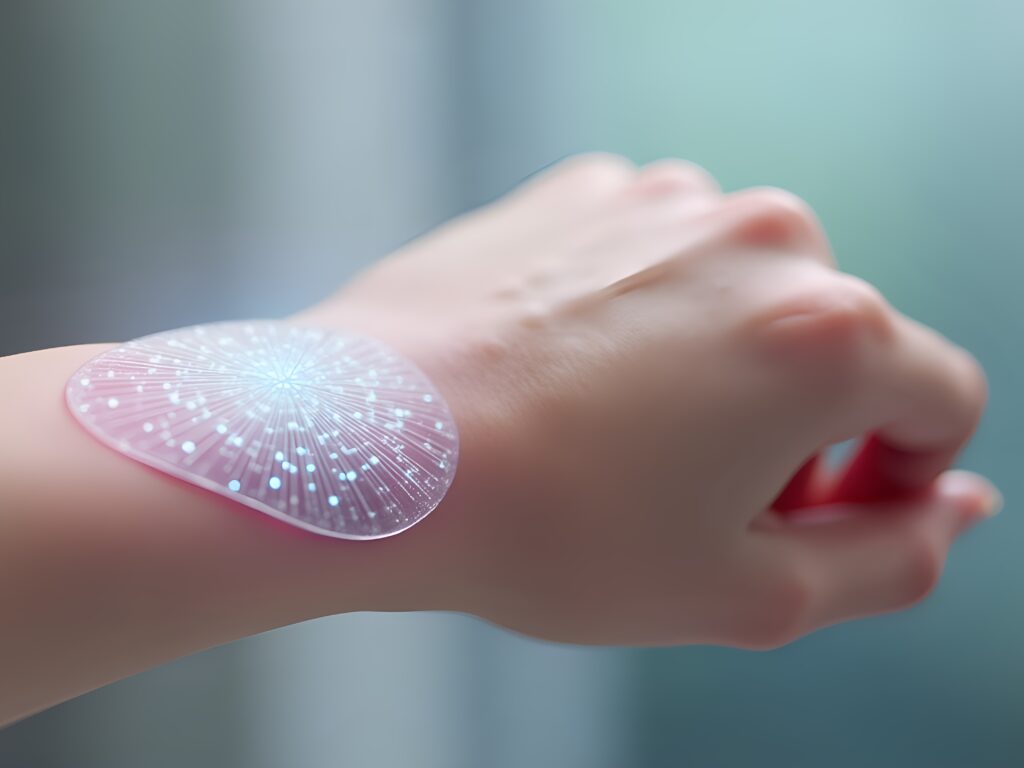
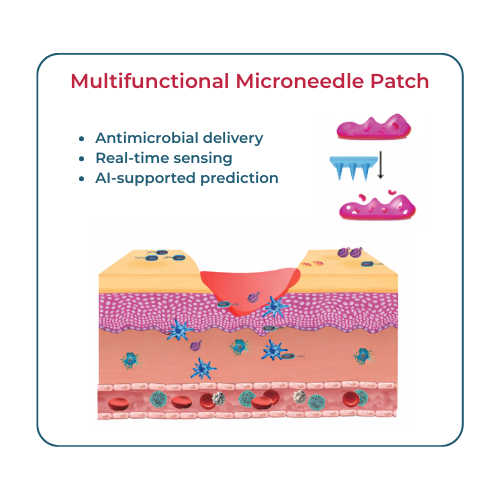
The project combines advanced nanomaterials, antimicrobial peptidomimetics, 3D printing technologies and Artificial Intelligence (AI) to prototype multifunctional microneedle wound patches capable of:
On-demand antimicrobial treatment
Real-time, label-free detection of infection biomarkers
Wound infections place a significant strain on healthcare systems and are a major cause of sepsis, hospitalisation and antimicrobial resistance. They are often difficult to treat, particularly when bacteria form protective biofilms. Current treatments frequently depend on broad-spectrum antibiotics and slow laboratory tests, which can delay targeted care.
HEAL-4WARD introduces smart microneedle wound patches as an integrated solution. The technology combines advanced nanomaterials, antimicrobial peptidomimetics and label-free sensors in a single platform. This enables real-time detection of infection biomarkers and on-demand antimicrobial action. Supported by 3D printing and artificial intelligence, the approach paves the way for more precise, personalised wound infection management.
Join the network
HEAL4WARD is recruiting 11 highly motivated and talented doctoral candidates to join our interdisciplinary network.
Each position offers a fully funded 36-month doctoral project, international mobility and intersectoral secondments across leading academic, clinical and industrial partners in Europe. If you are interested in working at the interface of nanomaterials, 3D printing, advanced sensing and AI in healthcare, explore the available positions below.
HEAL4WARD brings together a highly interdisciplinary and complementary consortium of 16 organisations from eight European countries, spanning academia, research, healthcare, industry and non-profit sectors. The consortium combines expertise in materials, nanotechnology, sensing, additive manufacturing, AI and clinical research.
Beneficiaries
Sapienza University of Rome (UNIROMA)
CIC biomaGUNE
University of Nottingham (UNOTT)
Royal College of Surgeons in Ireland (RCSI)
Centre National de la Recherche Scientifique (CRNS)
University of Groningen (UGRO)
University of Vigo (UVIGO)
National and Kapodistrian University of Athens (UoA)
Associated Partners
Global Sepsis Alliance (GSA)
Karolinska Institutet (KI)
Hellenic Institute for the Study of Sepsis (HISS)
Spiga Nord (SpigaN)
University of Paris Est-Créteil (UPEC)
University Toulouse III - Paul Sabatier (UT3)
Ourobionics (OURO)
University of the Basque County (UPV)
European Technology Platform on Nanomedicine (ETPN)